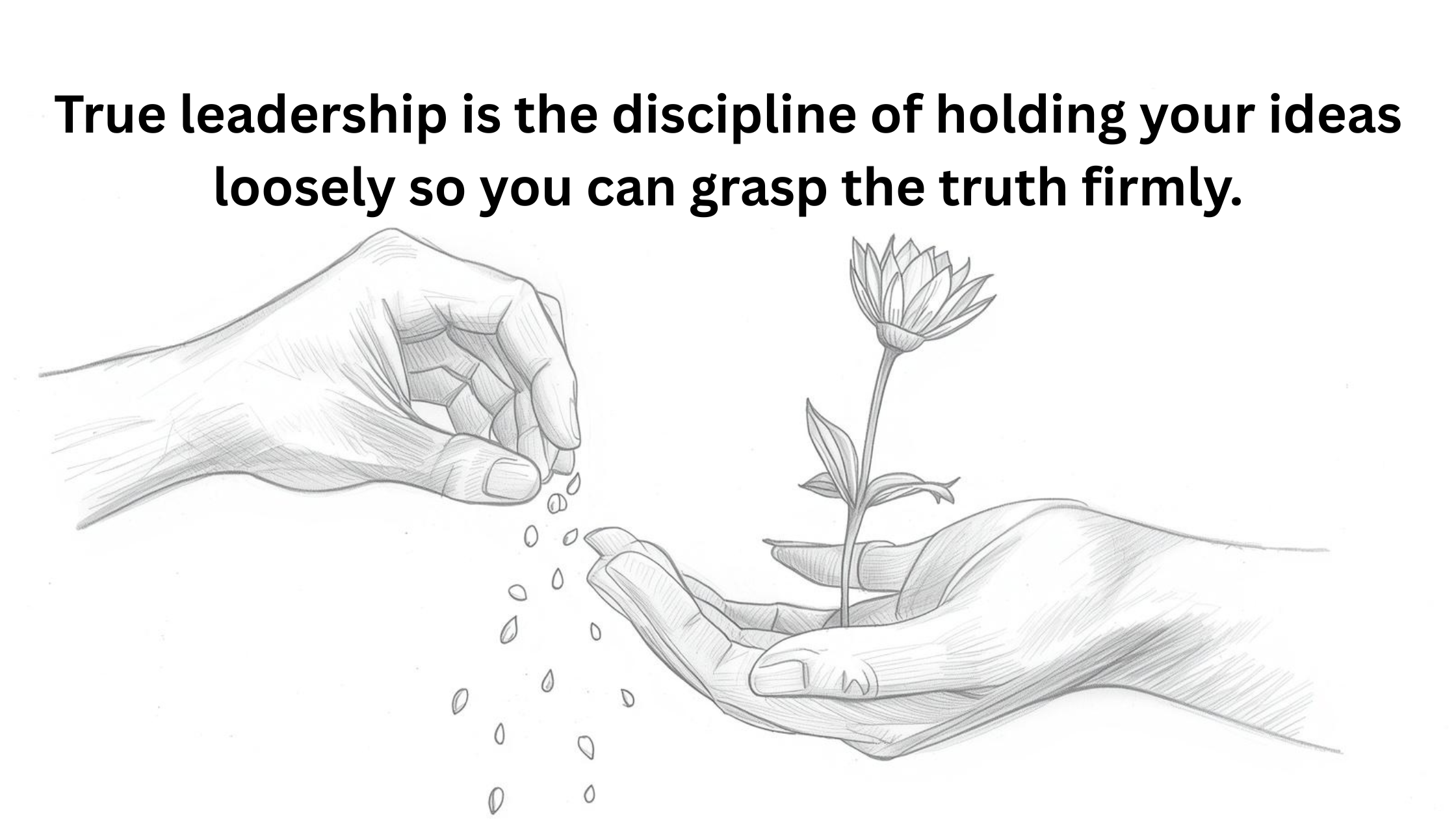

Seeing the Whole Board: Perspective as a Leadership Advantage
2 mins read
The project review had stalled again.
Voices circled the same details, each sharper than the last.
The leader at the head of the table listened, said little, and watched the energy drain from the room.
When the discussion paused, the leader asked a single question about the outcome everyone was trying to protect.
The room softened.
People leaned back.
The problem hadn't disappeared, yet it shrank to its proper size.
That moment was perspective at work.
Perspective gives leaders room to breathe.
It allows decisions to be guided by what endures rather than what shouts the loudest.
Leaders without it often slide into over-control, drifting toward habits that resemble micromanagement.
Leaders with perspective recognize which details deserve attention and which can wait.
Their calm signals confidence, and confidence steadies teams.
Rising Above the Moment
Perspective is practiced in restraint.
When pressure rises, the disciplined leader resists reacting and instead creates space to think.
This distance is not withdrawal; it is detachment with purpose.
By separating ego from outcome, leaders stay anchored while others rush.
Over time, this habit builds credibility and reinforces accountability as a shared standard.
Leaders who see the broader landscape also listen differently.
They value patterns over anecdotes and seek insight from those closest to the work, quietly applying the wisdom of listening to the front line.
This wider lens turns scattered inputs into coherent direction, helping teams move forward together.
Keeping the Long View
Perspective proves most valuable during strain.
When deadlines tighten and expectations mount, leaders who hold the long view prevent stress from becoming contagious.
They acknowledge pressure without amplifying it.
Their steadiness reminds others that today's challenge is a chapter, not the whole story.
Perspective is actually a discipline.
It is choosing patience over urgency, clarity over noise, and purpose over impulse.
Leaders who cultivate it consistently find themselves making fewer dramatic moves and more decisive ones.
By seeing the whole board, they lead with balance, and their teams learn to do the same.